Gooseneck Flatbed Trailers
Key Takeaways
- Gooseneck flatbed trailers mount directly over the towing vehicle’s rear axle, delivering superior stability and control compared to bumper pull designs—especially at highway speeds of 65-75 mph.
- These trailers typically range from 20’ to 44’ in length with deck widths of 102”, offering GVWR ratings from approximately 14,000 lb for lighter models up to 40,000 lb for heavy duty triple-axle configurations.
- Common applications include hotshot trucking, construction equipment transport, farm machinery hauling, and moving wide palletized loads that require open-deck accessibility.
- Modern gooseneck flatbeds feature engineered I-beam frames, pressure-treated lumber decks, lifetime LED lighting, and sealed wiring harnesses built for long-term durability and minimal maintenance.
- The following sections will help you determine the right length, GVWR, deck style, and optional features for your specific hauling needs.
Introduction to Gooseneck Flatbed Trailers
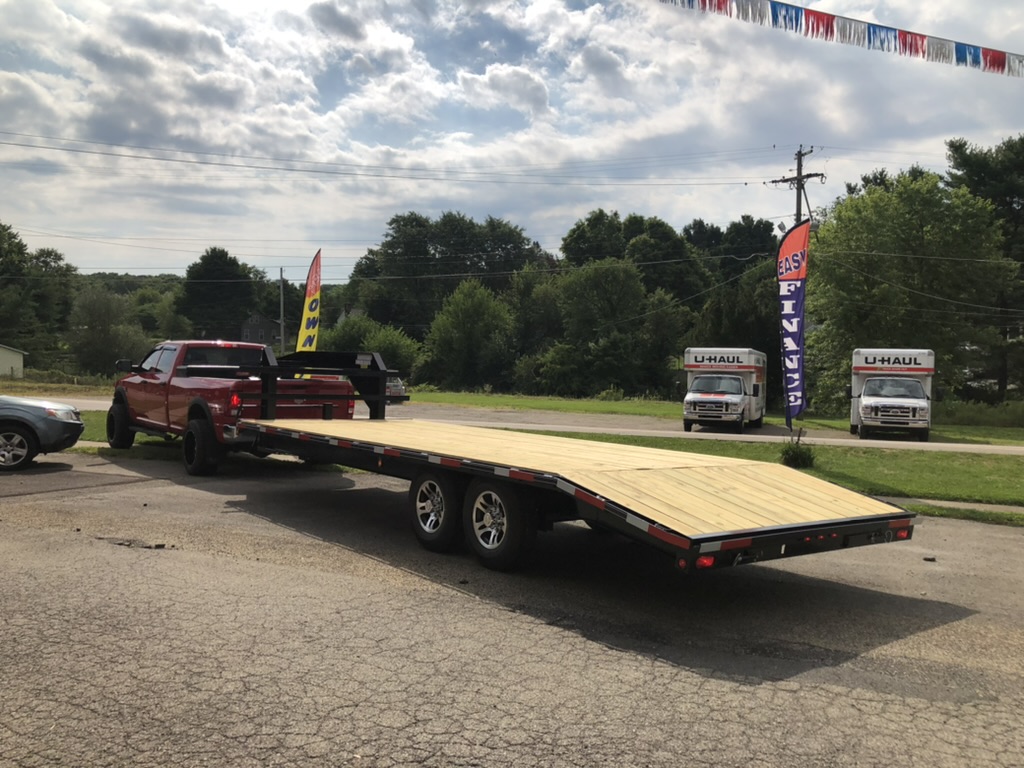
A gooseneck flatbed trailer consists of a flat, open deck connected to a curved neck that couples to a ball hitch mounted in the pickup truck bed. Unlike bumper pull trailers that attach at the vehicle’s rear bumper, the gooseneck design positions the connection point directly over the truck’s rear axle, creating fundamentally different weight distribution and handling characteristics.
This configuration gained widespread popularity from the 1990s through today among hotshot haulers, contractors, and farmers who need hauling power in the 14,000 to 40,000 lb capacity range without stepping up to a semi-truck. The design allows operators to handle heavy loads with standard 3/4-ton and 1-ton pickups while maintaining the versatility needed for job site access and farm operations.
Typical deck dimensions span 20’ to 40’ or longer in length and 102” in width, with most modern units running on dual 7,000 to 10,000 lb axles equipped with electric or electric-over-hydraulic brakes. This article covers the main types of flatbed gooseneck trailers, core construction features, typical specifications, and how to select the right trailer for common hauling tasks.

Why Choose a Gooseneck Flatbed vs. Other Trailer Types
When comparing gooseneck flatbeds with bumper pull flatbeds and deck-over tag-alongs, the differences become apparent in three critical areas: stability, load capacity, and maneuverability.
Stability Advantages
Flatbed trailers with gooseneck hitches position the coupling point directly above the truck’s rear axle rather than behind it. This placement creates several stability benefits:
- Reduced sway at highway speeds (65-75 mph) compared to bumper pull designs
- Better weight distribution across the towing vehicle’s suspension
- Lower risk of trailer-induced fishtailing, especially with shifting cargo
- More predictable handling for 3/4-ton and 1-ton pickups carrying heavier cargo
Weight Capacity Differences
The load capacity gap between trailer types is substantial:
Trailer Type | Typical GVWR Range |
|---|---|
Bumper Pull Flatbed | 10,000-14,000 lb |
Standard Gooseneck | 14,000-25,900 lb |
Heavy Duty Gooseneck | 25,000-40,000 lb |
Gooseneck trailers handle heavy loads more efficiently because a significant portion of the trailer’s weight transfers directly to the truck’s rear axle rather than creating leverage against the bumper area.
Turning Radius Benefits
The gooseneck hitch design allows the truck to pivot beneath the connection point, enabling tighter turns in confined spaces. This matters significantly on crowded construction sites, farm lots, and congested yards where bumper pull trailers of similar length would require multiple repositioning movements.
Before spec’ing a high-capacity trailer, verify your state’s licensing requirements. In the U.S., CDL requirements typically apply when the Gross Combination Weight Rating exceeds 26,000 lb and the trailer’s GVWR exceeds 10,000 lb.
Core Construction Features of Modern Gooseneck Flatbed Trailers
Modern gooseneck flatbed trailers are constructed with durability and strength in mind, using quality materials and design features to ensure safe and reliable transportation.
Frame design and component quality largely determine how long a trailer lasts and how much payload it can safely carry. Gooseneck trailers are often built with high-tensile steel frames and advanced suspension systems for improved performance. Understanding these construction elements helps you evaluate different models and price points.
Frame Materials and Main Beams
Most heavy duty trailers use high-tensile steel I-beam main frames. Since around 2015, engineered beam designs have become increasingly common, offering improved strength-to-weight ratios. These engineered I-beams allow manufacturers to build trailers with higher GVWR ratings without proportionally increasing trailer weight—leaving more capacity for actual cargo.
Cross-Member Spacing
Cross-members running perpendicular to the main beams support the deck and distribute point loads. Standard spacing runs 16” on center, while heavy-duty models may use closer spacing to support compact equipment with concentrated weight. Tighter cross-member patterns help prevent deck damage when loading excavators, skid steers, and other machinery with steel tracks or narrow tires.
Decking Materials
Common deck options include:
- Pressure-treated southern yellow pine: Standard on most models, offering good durability and grip
- Douglas fir or oak: Premium options with increased hardness and longevity
- Composite or Blackwood inserts: Enhanced skid resistance and reduced maintenance
Protective Design Elements
Quality gooseneck trailers incorporate features that protect both the trailer and its cargo:
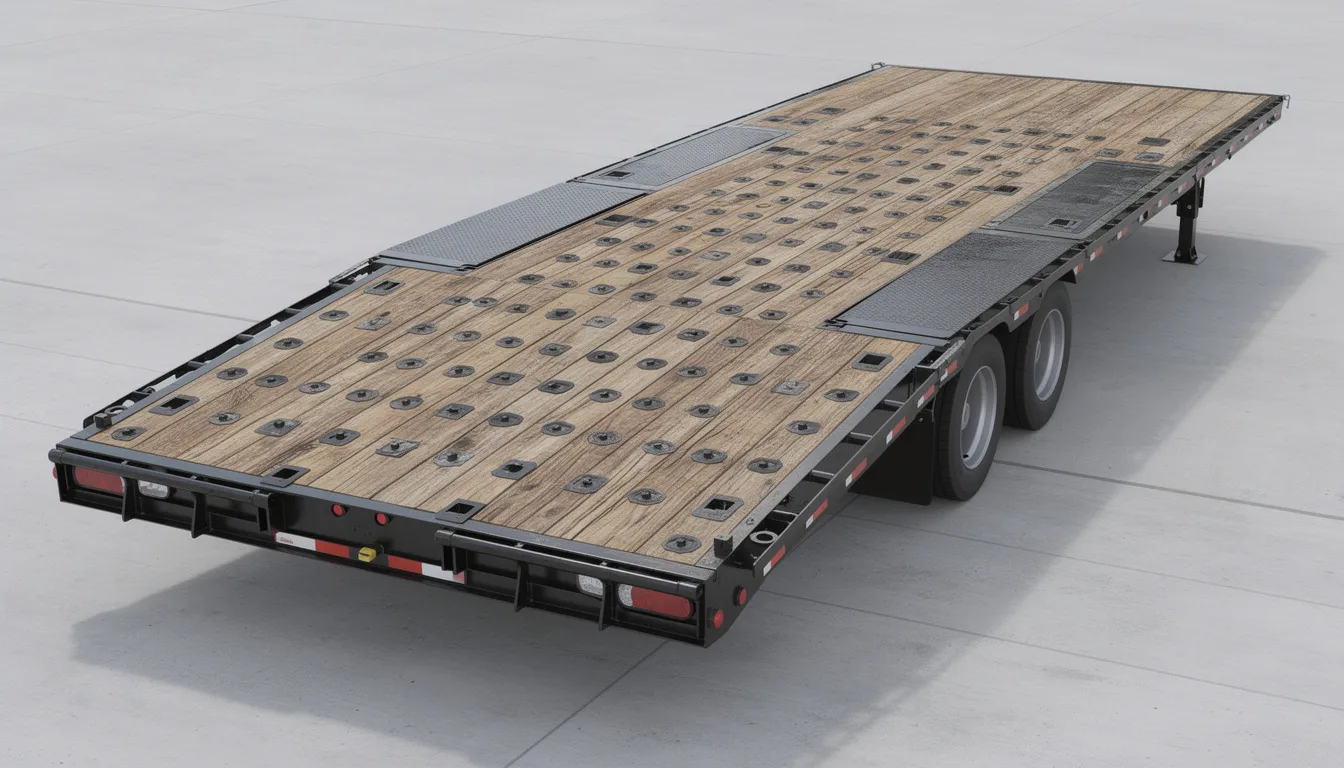
- Rub rail with integrated stake pockets and pipe spools every 12”-24” for tie-down versatility
- Outer frame tubing that shields wiring and lights from road debris
- Diamond plate fenders and running boards for added protection
Lighting and Wiring
Modern flatbed trailers typically feature lifetime LED tail lights and marker lights, which became standard on most quality models after 2017. Sealed wiring harnesses running through steel conduit resist corrosion and weather exposure far better than exposed wiring systems.
Additional Structural Elements
- Front toolboxes built into the neck for storage
- Torque tubes on longer decks providing torsional strength
- Gusseted risers at the neck transition reducing frame flex and cracking under load
Common Gooseneck Flatbed Configurations
Buyers encounter multiple flatbed gooseneck subtypes, each optimized for different jobs. Each model of gooseneck flatbed trailer offers great features tailored to specific hauling needs. Understanding these configurations helps match trailer design to your primary hauling needs.
Straight-Deck Goosenecks
The most basic configuration features a full-length flat deck, typically 20’ to 40’. These trailers excel at hauling palletized freight, lumber, pipe, and general cargo that loads from the side or rear using forklifts or cranes. Without dovetails or ramps, straight-deck models offer maximum usable deck space.
Dovetail Goosenecks
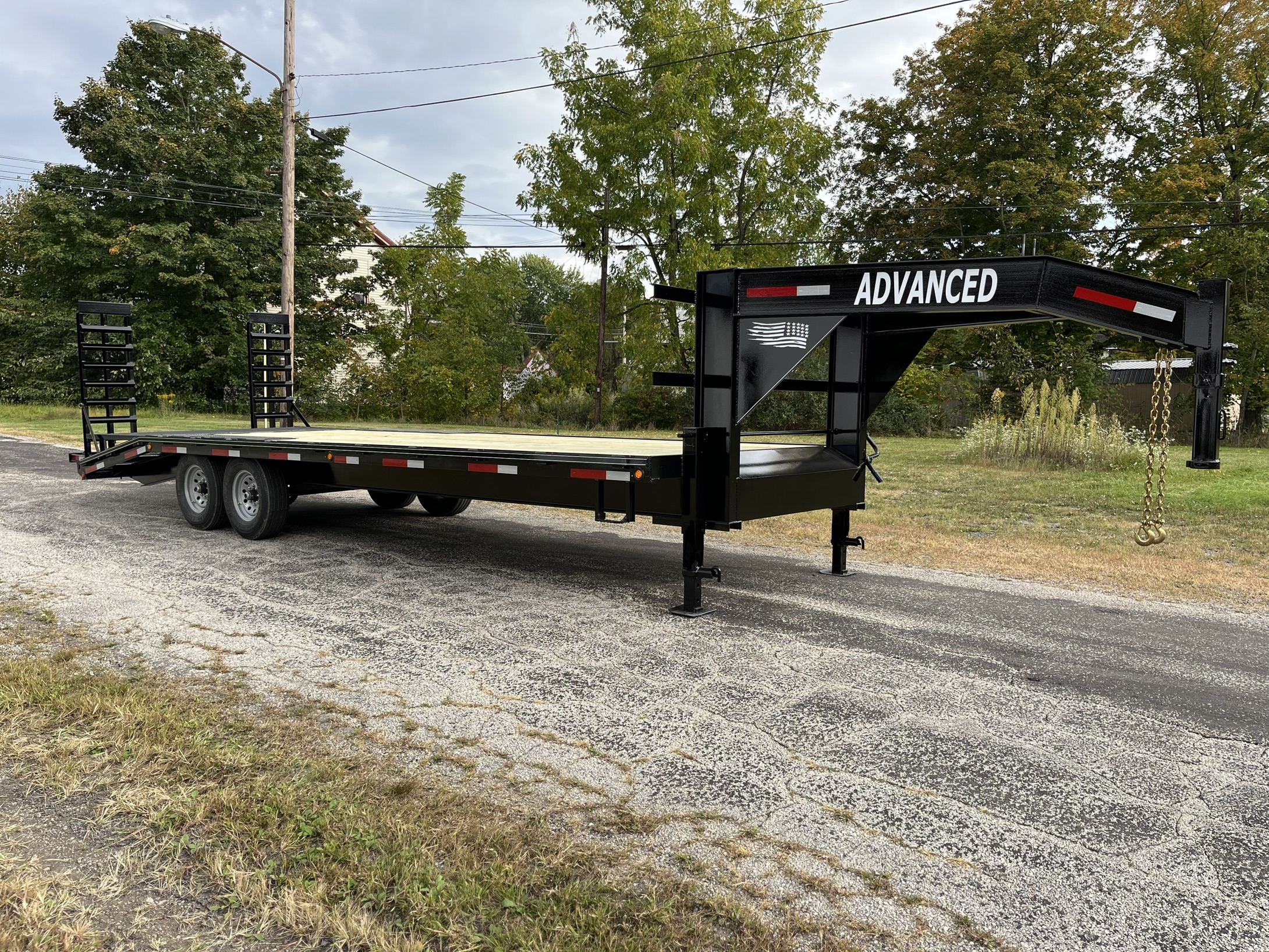
A dovetail configuration adds a sloped rear section (typically 2’-5’) plus flip-over ramps. This design allows drive-on loading for tractors, skid steers, scissor lifts, and vehicles without requiring external loading equipment. The dovetail reduces the loading angle, making it safer to drive equipment onto the deck.
Hydraulic Dovetail Models
For operations that load and unload multiple times daily, hydraulic dovetail goosenecks offer powered 10’-12’ dovetails that lay flat to the ground. Hotshot drivers and equipment rental companies particularly value this feature for efficiency and reduced physical effort during loading.
Deck-Over vs. Low-Profile Designs
- Deck-over goosenecks: The deck sits above the wheel wells, providing full 102” width across the entire length. Best for wide equipment and maximum deck space.
- Low-profile designs: Pierced-frame construction drops the deck a few inches, lowering the center of gravity and making loading easier. Trade-off includes wheel wells that reduce usable deck width in some areas.
Example Specifications:
- 30’ x 102” deck-over with 25,000 lb GVWR: Suits general contracting and equipment hauling
- 35’ low-profile with 25,900 lb GVWR: Popular for hotshot trucking requiring easier loading angles
Single- vs. Dual- and Triple-Axle Gooseneck Flatbeds
Axle count and rating dictate payload capacity, ride quality, and tire wear patterns. Selecting the right axle configurations depends on your typical loads and operating conditions.
Single-Axle Goosenecks
Less common but available in the 7,000-14,000 lb GVWR range. These lighter models suit small farms, regional deliveries, and operators who rarely approach maximum capacity. Lower purchase price and reduced tire costs offset the limited payload.
Dual-Axle Configurations
Two 7,000-10,000 lb axles yield typical GVWR ratings of 14,000-20,000 lb, making dual-axle the most common setup for contractors and hotshot drivers. Diamond C Trailers offers models like the FMAX207 (15,500 lb GVWR with 2-7K axles) and FMAX208 (18,000 lb GVWR with 2-8K axles) that serve this segment.
Triple-Axle Setups
Heavy-duty models in the 24,000-40,000 lb GVWR range use three axles to distribute weight across more tires and meet state axle weight limits. These trailers haul large excavators, dozers, and high-density freight where dual-axle configurations would be overloaded.
Suspension Options
- Spring suspension: Standard on most models, durable and lower maintenance
- Air-ride suspension: Common on higher-end hotshot and equipment-hauling trailers, protecting cargo and improving ride quality at highway speeds through advanced suspension systems
Typical Sizes, GVWR Ratings, and Popular Specs
Most buyers start by choosing deck length and GVWR based on the heaviest machine or load they plan to haul. Working backward from your maximum anticipated payload ensures you select adequate capacity.
Lightweight car-hauling gooseneck flatbed trailers are easy to handle and especially suitable for hauling dually trucks, as their design avoids fender clearance issues.
Common Deck Lengths
Available lengths span a wide range:
Length | Primary Use Cases |
|---|---|
20’-22’ | Compact equipment, small tractors, farm implements |
25’-28’ | Mixed-use hauling, moderate construction equipment |
30’-32’ | Hotshot trucking, multiple pieces of equipment |
35’-38’ | Regional freight, larger machinery |
40’-44’ | Maximum versatility, commercial operations |
The 25’-35’ range covers most mixed-use hauling applications and represents the most frequently purchased lengths.
GVWR Bands
Understanding GVWR helps you select models appropriate for your heaviest loads:
- 15,500-18,000 lb: Lighter dual wheel configurations, farm use, general-duty work
- 20,000-24,000 lb: Mid-range capacity, contractor favorites, moderate hotshot work
- 25,000-25,900 lb: Heavy-duty operations, full-size equipment transport
- 30,000-40,000 lb: Specialized triple-axle models for maximum payloads
Calculating Usable Payload
Subtract the trailer’s empty weight from its GVWR to determine actual payload capacity:
Example: A 25,000 lb GVWR trailer weighing 7,500 lb empty provides approximately 17,500 lb of usable payload for equipment and cargo.
Hotshot-Oriented Specifications
Operators running hotshot freight across state lines often spec trailers with:
- 30’-40’ low-profile decks with engineered beams
- Torque tube for torsional rigidity
- 17.5” or 19.5” commercial tires rated for sustained highway operation
- Upgraded electric-over-hydraulic disc brakes
Key Options and Upgrades to Consider
Options significantly affect usability, safety, and resale value. Investing in the right upgrades for your application pays dividends throughout the trailer’s service life.
Loading and Deck Options
- 44” wide monster ramps or Max Ramps: Handle wide equipment with secure footing
- 21” flip-over ramps: Standard for drive-on loading of lighter equipment
- Full-width hydraulic dovetail: Powered ground-level loading for heavy equipment
- Spring-assist dovetails: Easier operation for hay hauling and regular equipment loading
Jacks and Unloading Equipment
Standard trailers include dual spring-loaded drop-leg jacks. For operations involving frequent hitching and unhitching under load, hydraulic jacks reduce physical effort and speed up the process. Some models offer additional features like adjustable couplers to match various truck bed heights.
Braking and Electrical Upgrades
The right trailer needs reliable stopping power and dependable electrical systems:
- Electric-over-hydraulic disc brakes for improved stopping distance
- Breakaway systems meeting DOT requirements
- Sealed wiring harnesses with junction boxes for easy troubleshooting
- Lifetime LED marker and tail lights
Tire and Wheel Choices
Match tire ratings to your trailer’s GVWR. Options include:
- Radial tires as standard equipment
- Commercial-grade 17.5” packages for heavy-duty applications
- Spare tire mounts (some select models include spares)
Storage and Tie-Downs
Securing cargo properly prevents damage and ensures safe transport:
- Lockable toolbox with diamond plate construction in the neck
- Sliding winch tracks for adjustable tie-down positioning
- Chain racks for organized storage
- Multiple tie down points including D-rings and stake pockets
Matching a Gooseneck Flatbed to Your Hauling Needs
Start with your heaviest and longest planned load—not just today’s average job. Building in capacity headroom prevents the common mistake of outgrowing a trailer within a few years.
Guidance by User Group
Contractors hauling mini-excavators, skid steers, and building materials typically need:
- 25’-32’ deck length
- 18,000-25,000 lb GVWR
- Dovetail with ramps for drive-on loading
- Multiple tie-down options for securing mixed loads
Farmers transporting hay, tractors, and implements generally require:
- 20’-28’ deck length depending on equipment size
- 14,000-20,000 lb GVWR for most operations
- Straight deck or dovetail based on loading method
- Versatility for seasonal hauling tasks
Hotshot Drivers hauling mixed freight across state lines benefit from:
- 32’-40’ deck length for maximum freight flexibility
- 25,000-30,000 lb GVWR
- Low-profile design for easier loading
- Commercial-grade tires and upgraded braking
Practical Pairings
Application | Recommended Specs |
|---|---|
Small tractors, compact loaders | 20’-25’, 14,000-18,000 lb GVWR |
Regional hotshot work | 32’-40’, 25,000-30,000 lb GVWR |
Farm equipment, hay transport | 25’-30’, 18,000-22,000 lb GVWR |
Heavy construction equipment | 28’-35’, 24,000-30,000 lb GVWR |
Truck Compatibility
Ensure your towing vehicle can handle the loaded trailer weight. Most gooseneck flatbeds pair with 3/4-ton or 1-ton pickups, but verify:
- Truck’s GCWR (Gross Combined Weight Rating) exceeds truck weight plus loaded trailer weight
- Bed hitch is rated for the trailer’s GVWR
- Rear axle rating accommodates tongue weight (typically 15-25% of trailer weight)
Operational Considerations
Beyond weight capacity, consider:
- Loading method: Dock access, forklift availability, or drive-on requirements
- Turning space: Job site constraints may favor shorter trailers
- Storage: Where the trailer parks when not in use
Finding the perfect gooseneck trailer means balancing capacity, length, and features against your real-world operating environment.
Financing and Purchasing a Gooseneck Flatbed Trailer
Investing in a gooseneck flatbed trailer is a significant decision, whether you’re an independent hauler, a contractor, or managing a fleet for your business. Gooseneck trailers, especially flatbed gooseneck trailers, are renowned for their hauling power, stability, and ability to handle heavy duty tasks. Before making a purchase, it’s crucial to evaluate your towing vehicle’s capabilities, the trailer’s axle configurations, and its load capacity to ensure you’re choosing the perfect gooseneck trailer for your needs. Taking the time to assess these factors will help you select a trailer that delivers reliable performance and safety for all your hauling requirements.
New vs. Used: What to Consider
Choosing between a new and used gooseneck flatbed trailer comes down to your budget, desired features, and long-term plans. New trailers, such as those from Diamond C Trailers, offer the latest in quality, versatility, and advanced suspension systems. They often include warranties, sealed wiring harnesses for long-term reliability, and additional features like hydraulic jacks that make loading and unloading easier. While new models provide peace of mind and cutting-edge technology, they do come at a higher price point.
Used trailers can be a cost-effective solution, especially if you’re looking to maximize value. However, it’s important to thoroughly inspect any used trailer for signs of wear, rust, or outdated components. Pay close attention to the condition of the wiring, hydraulic systems, and any included features. Ask for maintenance records and check for upgrades or repairs that may affect the trailer’s performance. Whether you choose new or used, make sure the trailer aligns with your hauling needs and offers the features that matter most for your operations.
Financing Options and Tips
Securing the right financing can make purchasing a gooseneck flatbed trailer more accessible. Many buyers opt for loans, leases, or dealer-backed financing programs, especially when considering heavy duty trailers or premium models like Diamond C Trailers. When exploring your options, compare interest rates, down payment requirements, and repayment terms to find a plan that fits your budget.
Working with a reputable dealer can simplify the financing process. Dealers often have established relationships with lenders and may offer special promotions or incentives on select models. They can also help you navigate the paperwork and ensure you’re choosing the right trailer for your needs. Don’t hesitate to ask about financing options for both new and used trailers, and consider pre-approval to streamline your purchase. Remember, investing in a high-quality, heavy duty gooseneck trailer is a long-term decision—choose a financing plan that supports your business growth and hauling goals.
Dealer vs. Private Seller
Deciding where to buy your gooseneck flatbed trailer is just as important as choosing the trailer itself. Dealers typically offer a wide selection of flatbed trailers, including heavy duty and specialty models, and provide added benefits like warranties, maintenance support, and access to financing. Purchasing from a dealer also means you can rely on their expertise to help you select the right axle configurations and ensure the trailer is equipped with sealed wiring harnesses and other essential features.
Private sellers may offer more competitive pricing, but the responsibility for due diligence falls entirely on the buyer. Without the backing of a warranty or dealer support, it’s vital to thoroughly inspect the trailer’s condition, especially critical components like the axles and wiring. If you’re considering a private sale, bring along a knowledgeable mechanic or trailer expert to help evaluate the trailer’s suitability for your hauling needs. Whether you buy from a dealer or a private seller, prioritize quality, safety, and the features that will best serve your operations.
Inspection and Paperwork Essentials
Before finalizing your purchase, a comprehensive inspection is essential to ensure your gooseneck flatbed trailer is ready for the toughest jobs. Examine the trailer for any signs of wear or damage, focusing on high-stress areas like the rub rail, stake pockets, and hydraulic systems. Check that all multiple tie down points are secure and that the trailer’s features—such as lighting, brakes, and wiring—are fully functional.
In addition to the physical inspection, review all necessary paperwork. Confirm that the title and registration are clear and up to date, and that any financing documents are accurate. Make sure the trailer complies with all safety and regulatory standards, and consider adding security features to protect your cargo during transport. Understanding the warranty coverage and maintenance requirements will help you keep your trailer durable and versatile for years to come, whether you’re hauling heavy equipment or tackling a variety of demanding hauling tasks. Taking these steps ensures your investment is protected and your gooseneck trailer is ready to deliver reliable performance on every job.
Ownership, Maintenance, and Safety Considerations
Regular maintenance and safe operating practices protect both your trailer investment and other road users. A dependable trailer requires attention to several key areas.
Routine Checks
Before each trip, verify:
- Tire pressure matches specifications and tread shows adequate depth
- Brake function responds properly at low speeds
- All lights operate correctly
- Hitch engagement is secure and safety chains are connected
Scheduled Maintenance
Component | Service Interval |
|---|---|
Wheel bearings | Annually or per manufacturer mileage recommendation |
Brake inspection | Every 12,000 miles or annually |
Wiring inspection | Annually, more often in harsh conditions |
Suspension components | Inspect seasonally |
Decking Maintenance
Treated lumber decks require periodic attention:
- Re-seal boards every 2-3 years to maintain weather resistance
- Replace boards showing rot, splitting, or severe damage
- Tighten or replace worn fasteners securing deck to frame
Structural Inspections
Inspect critical stress points regularly, especially on trailers operating near capacity:
- Neck-to-deck junction for cracks or weld failures
- Cross-member welds along the frame
- Suspension hangers and mounting points
- Coupler and hitch ball socket for wear
Safety Practices
Safe operation extends beyond mechanical condition:
- Distribute weight properly over axles (avoid concentrating heavy items at rear)
- Use rated chains and binders appropriate for cargo weight
- Follow state tie-down regulations for machinery transport
- Verify hitch engagement and safety chain connection before every trip
Warranty Coverage
Most manufacturers offer frame warranties of 3 years or more on newer models, with at least 1-year limited coverage on components. Keep all purchase documentation, maintenance records, and warranty information organized for potential claims.
FAQ
Do I need a CDL to tow a gooseneck flatbed trailer?
In the U.S., a Commercial Driver’s License is generally required when the combined Gross Combination Weight Rating of truck and trailer exceeds 26,000 lb and the trailer’s GVWR exceeds 10,000 lb. This means many heavy duty gooseneck flatbeds push operators into CDL territory when loaded near capacity. Rules vary by state, so check with your state’s Department of Motor Vehicles for current requirements before operating a high-GVWR gooseneck. Insurance providers may also have different coverage expectations once equipment moves into CDL territory.
What kind of truck do I need to pull a 25,000 lb GVWR gooseneck flatbed?
Most 25,000 lb GVWR gooseneck flatbeds pair best with at least a 1-ton (3500/350/3500HD class) pickup equipped with a properly rated bed hitch and sufficient GCWR from the manufacturer. Check your truck’s door jamb sticker for GCWR and rear axle ratings, ensuring the loaded trailer weight plus cargo doesn’t exceed those limits. For repeated long-distance hauling near maximum weight, many operators choose chassis-cab or medium-duty trucks for added braking power and drivetrain durability.
Can I install a gooseneck hitch in my existing pickup bed?
Most full-size pickups from the mid-2000s onward can accept an aftermarket or OEM gooseneck hitch kit rated 25,000-30,000 lb or more. Professional installation is recommended, as proper frame attachment, bed reinforcement, and correct placement over or slightly forward of the rear axle are critical for safety and performance. Many trucks built after 2011 offer factory prep packages with under-bed reinforcements and removable hitch balls, simplifying installation and ensuring reliable quality.
Is buying a used gooseneck flatbed trailer a good idea?
A well-maintained used gooseneck can deliver excellent value, particularly for buyers with moderate annual mileage or farm use. When inspecting a used trailer, examine the frame and neck carefully for rust and cracks, check deck condition for rot or damage, verify brake and light function, and confirm that VIN plate and GVWR markings remain intact and legible. Ask for maintenance records covering bearing services, tire replacement, and brake work. Verify the trailer hasn’t been overloaded or significantly modified from factory specifications.
How should I store my gooseneck flatbed trailer when not in use?
Park on firm, level ground with the parking brake engaged and wheels chocked. If possible, store under cover or keep the deck as dry as conditions allow. Periodically move the trailer to prevent flat-spotting tires, and check tire pressure before each new season of use. Clean road salt and debris from the frame, especially in northern climates where corrosion risk is higher. Touch up chipped paint promptly to reduce long-term rust development and maintain the trailer’s reliability and resale value.
EXPLORE MORE
RELATED ARTICLES

Top 5th Wheel Flatbed Trailer Models Available Today
Need a reliable 5th wheel flatbed trailer for heavy-duty hauling? This guide covers top models, key features, and what to consider when choosing the best trailer for your needs. Key Takeaways Discover Our Premium 5th Wheel Flatbed Trailers Advanced Trailer MFG takes pride in offering a range of high-quality flatbed…
Flatbed Car Trailers for Sale: Professional Grade Solutions for Vehicle Transport
Finding the right flatbed car trailer means matching your specific hauling needs with proven engineering and reliable performance. Whether you’re transporting classic cars to shows, moving inventory between dealerships, or hauling heavy equipment across uneven terrain, the right trailer makes every job safer and more efficient. Why Choose Flatbed Car…
20 ft Flatbed Trailers: Specs, Uses & Buying Tips
A 20 ft flatbed trailer delivers the right balance of hauling capacity and maneuverability for medium-duty transport needs. These versatile trailers feature an open deck design that accommodates oversized equipment, construction materials, and vehicles that won’t fit in enclosed trailers. Design and Construction The typical 20 ft flatbed trailer features…
Best Flat Bed Trailers for Sale | Top Deals to Enhance Your Hauling
Need a flatbed trailer for your hauling needs? This article will guide you through the types, features, and considerations for choosing the right trailers flat bed. Learn what to look for and make an informed choice. Key Takeaways Explore Our Range of Flatbed Trailers Our comprehensive selection of flatbed trailers…
Gooseneck or Bumper Pull: Which Trailer is Best for You?
Trying to choose between a gooseneck or bumper pull trailer? This article explains the differences and helps you decide which is best for your needs. Key Takeaways Understanding Trailer Types When it comes to towing, two primary trailer types dominate the market: bumper pull and gooseneck trailers. These two options…
Top Picks for Your Custom Built Trailer Needs
Looking for a trailer that fits your specific needs? A custom built trailer might be the answer. In this article, you’ll learn the benefits of custom trailers, explore various customization options, and discover different types available. See how a custom trailer can meet your needs perfectly. Key Takeaways Why Choose…
Flat Trailer Solutions Built For The Long Haul
A flat trailer offers a reliable way to transport large, heavy loads. This article covers what flat trailers are, their benefits, and available options to help you choose the best one for your needs. Key Takeaways High-Quality Flatbed Trailers for All Your Hauling Needs Built with reliable and durable parts,…
Gooseneck or Bumper Pull: Which Trailer is Best for You?
Trying to choose between a gooseneck or bumper pull trailer? This article explains the differences and helps you decide which is best for your needs. Key Takeaways Understanding Trailer Types When it comes to towing, two primary trailer types dominate the market: bumper pull and gooseneck trailers. These two options…
Top-Rated Gooseneck Flatbed Trailer Options for Your Hauling Needs
Top-Rated Gooseneck Flatbed Trailer Options for Your Hauling Needs A gooseneck flatbed trailer excels at heavy-duty hauling, offering superior stability by attaching to the truck bed. Ideal for transporting equipment or livestock, this guide covers top-rated options, key features, and tips for choosing the right model. Key Takeaways Gooseneck flatbed…

Gooseneck Flatbed Trailers
Key Takeaways
- Gooseneck flatbed trailers mount directly over the towing vehicle’s rear axle, delivering superior stability and control compared to bumper pull designs—especially at highway speeds of 65-75 mph.
- These trailers typically range from 20’ to 44’ in length with deck widths of 102”, offering GVWR ratings from approximately 14,000 lb for lighter models up to 40,000 lb for heavy duty triple-axle configurations.
- Common applications include hotshot trucking, construction equipment transport, farm machinery hauling, and moving wide palletized loads that require open-deck accessibility.
- Modern gooseneck flatbeds feature engineered I-beam frames, pressure-treated lumber decks, lifetime LED lighting, and sealed wiring harnesses built for long-term durability and minimal maintenance.
- The following sections will help you determine the right length, GVWR, deck style, and optional features for your specific hauling needs.
Introduction to Gooseneck Flatbed Trailers
A gooseneck flatbed trailer consists of a flat, open deck connected to a curved neck that couples to a ball hitch mounted in the pickup truck bed. Unlike bumper pull trailers that attach at the vehicle’s rear bumper, the gooseneck design positions the connection point directly over the truck’s rear axle, creating fundamentally different weight distribution and handling characteristics.
This configuration gained widespread popularity from the 1990s through today among hotshot haulers, contractors, and farmers who need hauling power in the 14,000 to 40,000 lb capacity range without stepping up to a semi-truck. The design allows operators to handle heavy loads with standard 3/4-ton and 1-ton pickups while maintaining the versatility needed for job site access and farm operations.
Typical deck dimensions span 20’ to 40’ or longer in length and 102” in width, with most modern units running on dual 7,000 to 10,000 lb axles equipped with electric or electric-over-hydraulic brakes. This article covers the main types of flatbed gooseneck trailers, core construction features, typical specifications, and how to select the right trailer for common hauling tasks.
Why Choose a Gooseneck Flatbed vs. Other Trailer Types
When comparing gooseneck flatbeds with bumper pull flatbeds and deck-over tag-alongs, the differences become apparent in three critical areas: stability, load capacity, and maneuverability.
Stability Advantages
Flatbed trailers with gooseneck hitches position the coupling point directly above the truck’s rear axle rather than behind it. This placement creates several stability benefits:
- Reduced sway at highway speeds (65-75 mph) compared to bumper pull designs
- Better weight distribution across the towing vehicle’s suspension
- Lower risk of trailer-induced fishtailing, especially with shifting cargo
- More predictable handling for 3/4-ton and 1-ton pickups carrying heavier cargo
Weight Capacity Differences
The load capacity gap between trailer types is substantial:
Trailer Type | Typical GVWR Range |
|---|---|
Bumper Pull Flatbed | 10,000-14,000 lb |
Standard Gooseneck | 14,000-25,900 lb |
Heavy Duty Gooseneck | 25,000-40,000 lb |
Gooseneck trailers handle heavy loads more efficiently because a significant portion of the trailer’s weight transfers directly to the truck’s rear axle rather than creating leverage against the bumper area.
Turning Radius Benefits
The gooseneck hitch design allows the truck to pivot beneath the connection point, enabling tighter turns in confined spaces. This matters significantly on crowded construction sites, farm lots, and congested yards where bumper pull trailers of similar length would require multiple repositioning movements.
Before spec’ing a high-capacity trailer, verify your state’s licensing requirements. In the U.S., CDL requirements typically apply when the Gross Combination Weight Rating exceeds 26,000 lb and the trailer’s GVWR exceeds 10,000 lb.
Core Construction Features of Modern Gooseneck Flatbed Trailers
Modern gooseneck flatbed trailers are constructed with durability and strength in mind, using quality materials and design features to ensure safe and reliable transportation.
Frame design and component quality largely determine how long a trailer lasts and how much payload it can safely carry. Gooseneck trailers are often built with high-tensile steel frames and advanced suspension systems for improved performance. Understanding these construction elements helps you evaluate different models and price points.
Frame Materials and Main Beams
Most heavy duty trailers use high-tensile steel I-beam main frames. Since around 2015, engineered beam designs have become increasingly common, offering improved strength-to-weight ratios. These engineered I-beams allow manufacturers to build trailers with higher GVWR ratings without proportionally increasing trailer weight—leaving more capacity for actual cargo.
Cross-Member Spacing
Cross-members running perpendicular to the main beams support the deck and distribute point loads. Standard spacing runs 16” on center, while heavy-duty models may use closer spacing to support compact equipment with concentrated weight. Tighter cross-member patterns help prevent deck damage when loading excavators, skid steers, and other machinery with steel tracks or narrow tires.
Decking Materials
Common deck options include:
- Pressure-treated southern yellow pine: Standard on most models, offering good durability and grip
- Douglas fir or oak: Premium options with increased hardness and longevity
- Composite or Blackwood inserts: Enhanced skid resistance and reduced maintenance
Protective Design Elements
Quality gooseneck trailers incorporate features that protect both the trailer and its cargo:
- Rub rail with integrated stake pockets and pipe spools every 12”-24” for tie-down versatility
- Outer frame tubing that shields wiring and lights from road debris
- Diamond plate fenders and running boards for added protection
Lighting and Wiring
Modern flatbed trailers typically feature lifetime LED tail lights and marker lights, which became standard on most quality models after 2017. Sealed wiring harnesses running through steel conduit resist corrosion and weather exposure far better than exposed wiring systems.
Additional Structural Elements
- Front toolboxes built into the neck for storage
- Torque tubes on longer decks providing torsional strength
- Gusseted risers at the neck transition reducing frame flex and cracking under load
Common Gooseneck Flatbed Configurations
Buyers encounter multiple flatbed gooseneck subtypes, each optimized for different jobs. Each model of gooseneck flatbed trailer offers great features tailored to specific hauling needs. Understanding these configurations helps match trailer design to your primary hauling needs.
Straight-Deck Goosenecks
The most basic configuration features a full-length flat deck, typically 20’ to 40’. These trailers excel at hauling palletized freight, lumber, pipe, and general cargo that loads from the side or rear using forklifts or cranes. Without dovetails or ramps, straight-deck models offer maximum usable deck space.
Dovetail Goosenecks
A dovetail configuration adds a sloped rear section (typically 2’-5’) plus flip-over ramps. This design allows drive-on loading for tractors, skid steers, scissor lifts, and vehicles without requiring external loading equipment. The dovetail reduces the loading angle, making it safer to drive equipment onto the deck.
Hydraulic Dovetail Models
For operations that load and unload multiple times daily, hydraulic dovetail goosenecks offer powered 10’-12’ dovetails that lay flat to the ground. Hotshot drivers and equipment rental companies particularly value this feature for efficiency and reduced physical effort during loading.
Deck-Over vs. Low-Profile Designs
- Deck-over goosenecks: The deck sits above the wheel wells, providing full 102” width across the entire length. Best for wide equipment and maximum deck space.
- Low-profile designs: Pierced-frame construction drops the deck a few inches, lowering the center of gravity and making loading easier. Trade-off includes wheel wells that reduce usable deck width in some areas.
Example Specifications:
- 30’ x 102” deck-over with 25,000 lb GVWR: Suits general contracting and equipment hauling
- 35’ low-profile with 25,900 lb GVWR: Popular for hotshot trucking requiring easier loading angles
Single- vs. Dual- and Triple-Axle Gooseneck Flatbeds
Axle count and rating dictate payload capacity, ride quality, and tire wear patterns. Selecting the right axle configurations depends on your typical loads and operating conditions.
Single-Axle Goosenecks
Less common but available in the 7,000-14,000 lb GVWR range. These lighter models suit small farms, regional deliveries, and operators who rarely approach maximum capacity. Lower purchase price and reduced tire costs offset the limited payload.
Dual-Axle Configurations
Two 7,000-10,000 lb axles yield typical GVWR ratings of 14,000-20,000 lb, making dual-axle the most common setup for contractors and hotshot drivers. Diamond C Trailers offers models like the FMAX207 (15,500 lb GVWR with 2-7K axles) and FMAX208 (18,000 lb GVWR with 2-8K axles) that serve this segment.
Triple-Axle Setups
Heavy-duty models in the 24,000-40,000 lb GVWR range use three axles to distribute weight across more tires and meet state axle weight limits. These trailers haul large excavators, dozers, and high-density freight where dual-axle configurations would be overloaded.
Suspension Options
- Spring suspension: Standard on most models, durable and lower maintenance
- Air-ride suspension: Common on higher-end hotshot and equipment-hauling trailers, protecting cargo and improving ride quality at highway speeds through advanced suspension systems
Typical Sizes, GVWR Ratings, and Popular Specs
Most buyers start by choosing deck length and GVWR based on the heaviest machine or load they plan to haul. Working backward from your maximum anticipated payload ensures you select adequate capacity.
Lightweight car-hauling gooseneck flatbed trailers are easy to handle and especially suitable for hauling dually trucks, as their design avoids fender clearance issues.
Common Deck Lengths
Available lengths span a wide range:
Length | Primary Use Cases |
|---|---|
20’-22’ | Compact equipment, small tractors, farm implements |
25’-28’ | Mixed-use hauling, moderate construction equipment |
30’-32’ | Hotshot trucking, multiple pieces of equipment |
35’-38’ | Regional freight, larger machinery |
40’-44’ | Maximum versatility, commercial operations |
The 25’-35’ range covers most mixed-use hauling applications and represents the most frequently purchased lengths.
GVWR Bands
Understanding GVWR helps you select models appropriate for your heaviest loads:
- 15,500-18,000 lb: Lighter dual wheel configurations, farm use, general-duty work
- 20,000-24,000 lb: Mid-range capacity, contractor favorites, moderate hotshot work
- 25,000-25,900 lb: Heavy-duty operations, full-size equipment transport
- 30,000-40,000 lb: Specialized triple-axle models for maximum payloads
Calculating Usable Payload
Subtract the trailer’s empty weight from its GVWR to determine actual payload capacity:
Example: A 25,000 lb GVWR trailer weighing 7,500 lb empty provides approximately 17,500 lb of usable payload for equipment and cargo.
Hotshot-Oriented Specifications
Operators running hotshot freight across state lines often spec trailers with:
- 30’-40’ low-profile decks with engineered beams
- Torque tube for torsional rigidity
- 17.5” or 19.5” commercial tires rated for sustained highway operation
- Upgraded electric-over-hydraulic disc brakes
Key Options and Upgrades to Consider
Options significantly affect usability, safety, and resale value. Investing in the right upgrades for your application pays dividends throughout the trailer’s service life.
Loading and Deck Options
- 44” wide monster ramps or Max Ramps: Handle wide equipment with secure footing
- 21” flip-over ramps: Standard for drive-on loading of lighter equipment
- Full-width hydraulic dovetail: Powered ground-level loading for heavy equipment
- Spring-assist dovetails: Easier operation for hay hauling and regular equipment loading
Jacks and Unloading Equipment
Standard trailers include dual spring-loaded drop-leg jacks. For operations involving frequent hitching and unhitching under load, hydraulic jacks reduce physical effort and speed up the process. Some models offer additional features like adjustable couplers to match various truck bed heights.
Braking and Electrical Upgrades
The right trailer needs reliable stopping power and dependable electrical systems:
- Electric-over-hydraulic disc brakes for improved stopping distance
- Breakaway systems meeting DOT requirements
- Sealed wiring harnesses with junction boxes for easy troubleshooting
- Lifetime LED marker and tail lights
Tire and Wheel Choices
Match tire ratings to your trailer’s GVWR. Options include:
- Radial tires as standard equipment
- Commercial-grade 17.5” packages for heavy-duty applications
- Spare tire mounts (some select models include spares)
Storage and Tie-Downs
Securing cargo properly prevents damage and ensures safe transport:
- Lockable toolbox with diamond plate construction in the neck
- Sliding winch tracks for adjustable tie-down positioning
- Chain racks for organized storage
- Multiple tie down points including D-rings and stake pockets
Matching a Gooseneck Flatbed to Your Hauling Needs
Start with your heaviest and longest planned load—not just today’s average job. Building in capacity headroom prevents the common mistake of outgrowing a trailer within a few years.
Guidance by User Group
Contractors hauling mini-excavators, skid steers, and building materials typically need:
- 25’-32’ deck length
- 18,000-25,000 lb GVWR
- Dovetail with ramps for drive-on loading
- Multiple tie-down options for securing mixed loads
Farmers transporting hay, tractors, and implements generally require:
- 20’-28’ deck length depending on equipment size
- 14,000-20,000 lb GVWR for most operations
- Straight deck or dovetail based on loading method
- Versatility for seasonal hauling tasks
Hotshot Drivers hauling mixed freight across state lines benefit from:
- 32’-40’ deck length for maximum freight flexibility
- 25,000-30,000 lb GVWR
- Low-profile design for easier loading
- Commercial-grade tires and upgraded braking
Practical Pairings
Application | Recommended Specs |
|---|---|
Small tractors, compact loaders | 20’-25’, 14,000-18,000 lb GVWR |
Regional hotshot work | 32’-40’, 25,000-30,000 lb GVWR |
Farm equipment, hay transport | 25’-30’, 18,000-22,000 lb GVWR |
Heavy construction equipment | 28’-35’, 24,000-30,000 lb GVWR |
Truck Compatibility
Ensure your towing vehicle can handle the loaded trailer weight. Most gooseneck flatbeds pair with 3/4-ton or 1-ton pickups, but verify:
- Truck’s GCWR (Gross Combined Weight Rating) exceeds truck weight plus loaded trailer weight
- Bed hitch is rated for the trailer’s GVWR
- Rear axle rating accommodates tongue weight (typically 15-25% of trailer weight)
Operational Considerations
Beyond weight capacity, consider:
- Loading method: Dock access, forklift availability, or drive-on requirements
- Turning space: Job site constraints may favor shorter trailers
- Storage: Where the trailer parks when not in use
Finding the perfect gooseneck trailer means balancing capacity, length, and features against your real-world operating environment.
Financing and Purchasing a Gooseneck Flatbed Trailer
Investing in a gooseneck flatbed trailer is a significant decision, whether you’re an independent hauler, a contractor, or managing a fleet for your business. Gooseneck trailers, especially flatbed gooseneck trailers, are renowned for their hauling power, stability, and ability to handle heavy duty tasks. Before making a purchase, it’s crucial to evaluate your towing vehicle’s capabilities, the trailer’s axle configurations, and its load capacity to ensure you’re choosing the perfect gooseneck trailer for your needs. Taking the time to assess these factors will help you select a trailer that delivers reliable performance and safety for all your hauling requirements.
New vs. Used: What to Consider
Choosing between a new and used gooseneck flatbed trailer comes down to your budget, desired features, and long-term plans. New trailers, such as those from Diamond C Trailers, offer the latest in quality, versatility, and advanced suspension systems. They often include warranties, sealed wiring harnesses for long-term reliability, and additional features like hydraulic jacks that make loading and unloading easier. While new models provide peace of mind and cutting-edge technology, they do come at a higher price point.
Used trailers can be a cost-effective solution, especially if you’re looking to maximize value. However, it’s important to thoroughly inspect any used trailer for signs of wear, rust, or outdated components. Pay close attention to the condition of the wiring, hydraulic systems, and any included features. Ask for maintenance records and check for upgrades or repairs that may affect the trailer’s performance. Whether you choose new or used, make sure the trailer aligns with your hauling needs and offers the features that matter most for your operations.
Financing Options and Tips
Securing the right financing can make purchasing a gooseneck flatbed trailer more accessible. Many buyers opt for loans, leases, or dealer-backed financing programs, especially when considering heavy duty trailers or premium models like Diamond C Trailers. When exploring your options, compare interest rates, down payment requirements, and repayment terms to find a plan that fits your budget.
Working with a reputable dealer can simplify the financing process. Dealers often have established relationships with lenders and may offer special promotions or incentives on select models. They can also help you navigate the paperwork and ensure you’re choosing the right trailer for your needs. Don’t hesitate to ask about financing options for both new and used trailers, and consider pre-approval to streamline your purchase. Remember, investing in a high-quality, heavy duty gooseneck trailer is a long-term decision—choose a financing plan that supports your business growth and hauling goals.
Dealer vs. Private Seller
Deciding where to buy your gooseneck flatbed trailer is just as important as choosing the trailer itself. Dealers typically offer a wide selection of flatbed trailers, including heavy duty and specialty models, and provide added benefits like warranties, maintenance support, and access to financing. Purchasing from a dealer also means you can rely on their expertise to help you select the right axle configurations and ensure the trailer is equipped with sealed wiring harnesses and other essential features.
Private sellers may offer more competitive pricing, but the responsibility for due diligence falls entirely on the buyer. Without the backing of a warranty or dealer support, it’s vital to thoroughly inspect the trailer’s condition, especially critical components like the axles and wiring. If you’re considering a private sale, bring along a knowledgeable mechanic or trailer expert to help evaluate the trailer’s suitability for your hauling needs. Whether you buy from a dealer or a private seller, prioritize quality, safety, and the features that will best serve your operations.
Inspection and Paperwork Essentials
Before finalizing your purchase, a comprehensive inspection is essential to ensure your gooseneck flatbed trailer is ready for the toughest jobs. Examine the trailer for any signs of wear or damage, focusing on high-stress areas like the rub rail, stake pockets, and hydraulic systems. Check that all multiple tie down points are secure and that the trailer’s features—such as lighting, brakes, and wiring—are fully functional.
In addition to the physical inspection, review all necessary paperwork. Confirm that the title and registration are clear and up to date, and that any financing documents are accurate. Make sure the trailer complies with all safety and regulatory standards, and consider adding security features to protect your cargo during transport. Understanding the warranty coverage and maintenance requirements will help you keep your trailer durable and versatile for years to come, whether you’re hauling heavy equipment or tackling a variety of demanding hauling tasks. Taking these steps ensures your investment is protected and your gooseneck trailer is ready to deliver reliable performance on every job.
Ownership, Maintenance, and Safety Considerations
Regular maintenance and safe operating practices protect both your trailer investment and other road users. A dependable trailer requires attention to several key areas.
Routine Checks
Before each trip, verify:
- Tire pressure matches specifications and tread shows adequate depth
- Brake function responds properly at low speeds
- All lights operate correctly
- Hitch engagement is secure and safety chains are connected
Scheduled Maintenance
Component | Service Interval |
|---|---|
Wheel bearings | Annually or per manufacturer mileage recommendation |
Brake inspection | Every 12,000 miles or annually |
Wiring inspection | Annually, more often in harsh conditions |
Suspension components | Inspect seasonally |
Decking Maintenance
Treated lumber decks require periodic attention:
- Re-seal boards every 2-3 years to maintain weather resistance
- Replace boards showing rot, splitting, or severe damage
- Tighten or replace worn fasteners securing deck to frame
Structural Inspections
Inspect critical stress points regularly, especially on trailers operating near capacity:
- Neck-to-deck junction for cracks or weld failures
- Cross-member welds along the frame
- Suspension hangers and mounting points
- Coupler and hitch ball socket for wear
Safety Practices
Safe operation extends beyond mechanical condition:
- Distribute weight properly over axles (avoid concentrating heavy items at rear)
- Use rated chains and binders appropriate for cargo weight
- Follow state tie-down regulations for machinery transport
- Verify hitch engagement and safety chain connection before every trip
Warranty Coverage
Most manufacturers offer frame warranties of 3 years or more on newer models, with at least 1-year limited coverage on components. Keep all purchase documentation, maintenance records, and warranty information organized for potential claims.
FAQ
Do I need a CDL to tow a gooseneck flatbed trailer?
In the U.S., a Commercial Driver’s License is generally required when the combined Gross Combination Weight Rating of truck and trailer exceeds 26,000 lb and the trailer’s GVWR exceeds 10,000 lb. This means many heavy duty gooseneck flatbeds push operators into CDL territory when loaded near capacity. Rules vary by state, so check with your state’s Department of Motor Vehicles for current requirements before operating a high-GVWR gooseneck. Insurance providers may also have different coverage expectations once equipment moves into CDL territory.
What kind of truck do I need to pull a 25,000 lb GVWR gooseneck flatbed?
Most 25,000 lb GVWR gooseneck flatbeds pair best with at least a 1-ton (3500/350/3500HD class) pickup equipped with a properly rated bed hitch and sufficient GCWR from the manufacturer. Check your truck’s door jamb sticker for GCWR and rear axle ratings, ensuring the loaded trailer weight plus cargo doesn’t exceed those limits. For repeated long-distance hauling near maximum weight, many operators choose chassis-cab or medium-duty trucks for added braking power and drivetrain durability.
Can I install a gooseneck hitch in my existing pickup bed?
Most full-size pickups from the mid-2000s onward can accept an aftermarket or OEM gooseneck hitch kit rated 25,000-30,000 lb or more. Professional installation is recommended, as proper frame attachment, bed reinforcement, and correct placement over or slightly forward of the rear axle are critical for safety and performance. Many trucks built after 2011 offer factory prep packages with under-bed reinforcements and removable hitch balls, simplifying installation and ensuring reliable quality.
Is buying a used gooseneck flatbed trailer a good idea?
A well-maintained used gooseneck can deliver excellent value, particularly for buyers with moderate annual mileage or farm use. When inspecting a used trailer, examine the frame and neck carefully for rust and cracks, check deck condition for rot or damage, verify brake and light function, and confirm that VIN plate and GVWR markings remain intact and legible. Ask for maintenance records covering bearing services, tire replacement, and brake work. Verify the trailer hasn’t been overloaded or significantly modified from factory specifications.
How should I store my gooseneck flatbed trailer when not in use?
Park on firm, level ground with the parking brake engaged and wheels chocked. If possible, store under cover or keep the deck as dry as conditions allow. Periodically move the trailer to prevent flat-spotting tires, and check tire pressure before each new season of use. Clean road salt and debris from the frame, especially in northern climates where corrosion risk is higher. Touch up chipped paint promptly to reduce long-term rust development and maintain the trailer’s reliability and resale value.
EXPLORE MORE
RELATED ARTICLES
Top 5th Wheel Flatbed Trailer Models Available Today
Need a reliable 5th wheel flatbed trailer for heavy-duty hauling? This guide covers top models, key features, and what to consider when choosing the best trailer for your needs. Key Takeaways Discover Our Premium 5th Wheel Flatbed Trailers Advanced Trailer MFG takes pride in offering a range of high-quality flatbed…
Multiple Car Hauler Trailer: Complete Guide to Multi-Vehicle Transport Solutions
Expert Multiple Car Hauler Trailer Services and Solutions Transform your vehicle transport capabilities with professional car hauler trailers designed to haul multiple cars efficiently and safely. Get Your Multiple Car Hauler Quote Today! Why Multiple Car Hauler Trailers Are Essential for Your Business Multiple car hauler trailers maximize efficiency by…
Flatbed Car Trailers for Sale: Professional Grade Solutions for Vehicle Transport
Finding the right flatbed car trailer means matching your specific hauling needs with proven engineering and reliable performance. Whether you’re transporting classic cars to shows, moving inventory between dealerships, or hauling heavy equipment across uneven terrain, the right trailer makes every job safer and more efficient. Why Choose Flatbed Car…
20 ft Flatbed Trailers: Specs, Uses & Buying Tips
A 20 ft flatbed trailer delivers the right balance of hauling capacity and maneuverability for medium-duty transport needs. These versatile trailers feature an open deck design that accommodates oversized equipment, construction materials, and vehicles that won’t fit in enclosed trailers. Design and Construction The typical 20 ft flatbed trailer features…
Best Flat Bed Trailers for Sale | Top Deals to Enhance Your Hauling
Need a flatbed trailer for your hauling needs? This article will guide you through the types, features, and considerations for choosing the right trailers flat bed. Learn what to look for and make an informed choice. Key Takeaways Explore Our Range of Flatbed Trailers Our comprehensive selection of flatbed trailers…
Gooseneck or Bumper Pull: Which Trailer is Best for You?
Trying to choose between a gooseneck or bumper pull trailer? This article explains the differences and helps you decide which is best for your needs. Key Takeaways Understanding Trailer Types When it comes to towing, two primary trailer types dominate the market: bumper pull and gooseneck trailers. These two options…
Top Dual Tandem Trailer Options for Heavy-Duty Hauling
Searching for a trailer that can handle heavy-duty loads? Look no further than a dual tandem trailer. Known for their stability and durability, dual tandem trailers are built to manage the most demanding hauling tasks. In this article, we’ll cover what makes these trailers stand out, key features to look…
Top 10k Gooseneck Trailer Options for Heavy-Duty Hauling
Searching for the best 10k gooseneck trailer for heavy-duty hauling? This article covers top options, essential features, and what to consider when choosing the right trailer. Get ready to find out which models can handle your toughest tasks efficiently. Key Takeaways 10k Gooseneck Trailer Overview 10k gooseneck trailers are renowned…
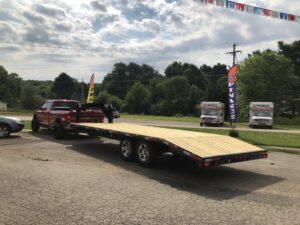
Top Flat Deck Trailer Options | Best Deals & Features
Flat deck trailers are perfect for hauling oversized or heavy loads. They transport construction materials, vehicles, and other large items efficiently. This guide explores top flat deck trailer options, key features, and how to choose the right one for your needs. Key Takeaways Discover the Best Flat Deck Trailers Flatbed…
Top Picks for Your Custom Built Trailer Needs
Looking for a trailer that fits your specific needs? A custom built trailer might be the answer. In this article, you’ll learn the benefits of custom trailers, explore various customization options, and discover different types available. See how a custom trailer can meet your needs perfectly. Key Takeaways Why Choose…